Advanced Battery Materials: Trends, Uses and Key Insights
Advanced battery materials are reshaping energy storage through improved electrodes, electrolytes, separators, and emerging chemistries designed for better performance, durability, and resource efficiency.
Advanced battery materials are specially engineered substances used to improve how batteries store and release electrical energy. They can include cathode materials, anode materials, electrolytes, separators, binders, and conductive additives.
Lithium-ion batteries remain widely used, but researchers are exploring alternatives such as sodium-ion, solid-state, lithium-metal, silicon-based, and other emerging battery chemistries.
The goal is not simply to make batteries more powerful. Materials research also focuses on energy density, cycle life, charging behavior, thermal stability, safety, resource availability, and recycling.
Common advanced materials include lithium-rich compounds, nickel- and manganese-based cathodes, silicon-containing anodes, solid electrolytes, hard carbon, and specialized ceramic or polymer materials.
Why Advanced Battery Materials Matter
Supporting Modern Energy Systems
Better battery materials can influence electric vehicles, renewable-energy storage, portable electronics, industrial equipment, and backup power systems.
For example, higher-energy-density materials can potentially allow more energy to be stored within a given battery volume. Improved thermal stability can help address safety challenges, while longer-lasting materials can reduce the frequency of battery replacement.
Resource availability is another important issue. The U.S. Department of Energy identifies lithium, graphite, cobalt, nickel, manganese, and several other materials as relevant to energy-storage technologies.
Advanced materials research therefore connects battery engineering with critical-mineral supply chains, materials science, environmental management, and industrial manufacturing.
| Material Area | Main Research Goal | Example Application |
|---|---|---|
| Advanced cathodes | Higher energy and stability | Electric vehicles |
| Silicon anodes | Greater lithium storage | High-energy batteries |
| Solid electrolytes | Improved safety and stability | Solid-state batteries |
| Hard carbon | Sodium storage | Stationary storage |
| Recycled materials | Resource recovery | Battery manufacturing |
Recent Battery Material Developments
Sodium-Ion Research
Sodium-ion batteries have received substantial research attention during 2026. Reviews published in January and March 2026 examined advances in cathodes, hard-carbon anodes, electrolytes, interfaces, and manufacturing approaches.
Sodium is relatively abundant, but sodium-ion technology still faces challenges involving energy density, cycle life, electrode stability, and large-scale manufacturing.
Solid-State Materials
Solid-state battery research is also progressing. Researchers are investigating solid electrolytes based on ceramics, sulfides, polymers, and other materials to address interfacial and ionic-conductivity challenges.
In September 2026, Panasonic Energy announced development of a solid-state battery designed to operate at temperatures up to 150°C, with sample shipments planned for later in the year.
Critical Material Supply Chains
Supply-chain diversification remains an important theme. In January 2025, the U.S. Department of Energy announced an intended funding opportunity of up to $725 million for domestic battery critical materials, components, and advanced-battery manufacturing.
Laws, Policies, and Regulatory Considerations
Government Frameworks
Battery materials are affected by policies covering critical minerals, industrial manufacturing, environmental protection, transportation, waste management, and recycling.
In the United States, the Department of Energy maintains critical-material assessments covering materials used in batteries and other energy technologies.
India is also strengthening its battery and critical-material ecosystem. In September 2026, NTPC invited proposals for a grid-connected sodium-ion battery energy-storage pilot intended to evaluate performance, safety, reliability, and scalability under Indian conditions.
Regulatory requirements can differ substantially by country, so manufacturers and researchers need to consider applicable battery-safety, transportation, environmental, recycling, and hazardous-material rules.
Tools and Resources for Battery Research
Helpful Resources
People learning about advanced battery materials can use:
- Battery performance calculators for energy, voltage, and capacity analysis
- Electrochemical testing software for laboratory measurements
- Materials databases for comparing chemical and physical properties
- Battery-cycle analysis spreadsheets for tracking degradation
- Molecular and materials simulation tools for atomic-level research
- Academic research databases for reviewing recent studies
- Government critical-mineral and battery-policy databases
- Recycling and lifecycle-assessment frameworks for environmental analysis
These resources can help users understand battery chemistry without relying on promotional claims.
Frequently Asked Questions
What are advanced battery materials?
They are engineered materials used in battery components to improve characteristics such as energy density, durability, safety, charging behavior, or resource efficiency.
Are advanced batteries replacing lithium-ion batteries?
Not generally. Lithium-ion remains an important battery technology, while sodium-ion, solid-state, lithium-metal, and other chemistries are being developed for different applications.
Why is sodium-ion battery research important?
Sodium-ion technology can reduce dependence on some lithium-based resources and is being studied for applications where energy density requirements can be balanced against material availability and other characteristics.
What is a solid-state battery?
A solid-state battery uses a solid electrolyte rather than the conventional liquid electrolyte found in many lithium-ion cells. Researchers are studying different solid materials to improve safety and electrochemical performance.
Can battery materials be recycled?
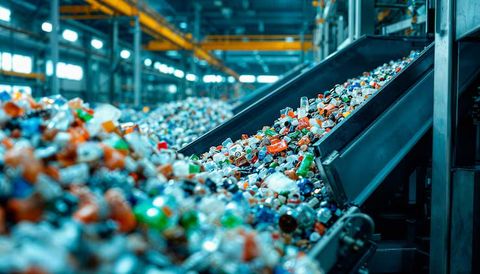
Yes. Battery recycling can recover selected materials and reduce the need for newly extracted resources. The practical recovery process depends on battery chemistry, cell design, collection systems, and applicable regulations.
Conclusion
Advanced battery materials are an important part of the broader development of energy storage. Research is moving beyond conventional lithium-ion formulations toward sodium-ion, solid-state, silicon-based, lithium-metal, and other material systems.
The field still has technical challenges, including durability, manufacturing scalability, material availability, safety, and recycling. Continued research, testing, regulation, and supply-chain development will determine how quickly different technologies move from laboratory research to broader applications.
Disclaimer:
This article is provided for general educational purposes. Battery performance, safety requirements, regulations, and technology availability can change over time. Specific engineering, environmental, transportation, or regulatory decisions should be based on current technical documentation and applicable local requirements.