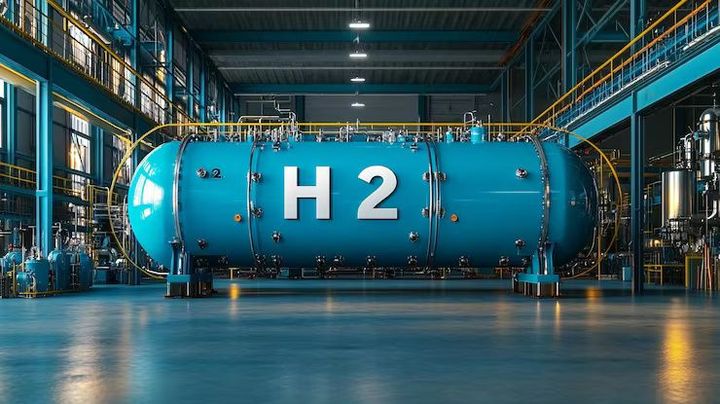
Hydrogen Production Equipment: Guide, Uses & Key Insights
Hydrogen production equipment includes the systems used to generate, purify, compress, monitor, and safely manage hydrogen for industrial and energy applications.
Hydrogen production equipment refers to the machinery and supporting systems used to produce hydrogen from water, natural gas, biomass, or other feedstocks. The equipment selected depends on the production pathway, required purity, operating scale, energy source, and intended application.
For electrolysis, the central component is an electrolyzer system, which uses electricity to split water into hydrogen and oxygen. Common configurations include alkaline, proton exchange membrane (PEM), and solid oxide electrolyzers.
Other hydrogen production plants can use steam methane reforming, biomass conversion, or gasification. These pathways require equipment such as reformers, reactors, gas separation units, heat exchangers, purification systems, compressors, storage systems, sensors, and control equipment.
Importance
Hydrogen production equipment matters because hydrogen is increasingly being considered for industrial processes, energy storage, ammonia production, refining, steelmaking, and other applications. The equipment determines how efficiently a facility converts its feedstock and energy into usable hydrogen.
A typical green hydrogen production system may include:
- Water treatment and purification equipment
- Electrolyzer stacks and power electronics
- Hydrogen separation and purification units
- Drying and filtration systems
- Compression and storage equipment
- Instrumentation and process-control systems
- Leak detection and safety equipment
Electrolyzer selection also matters. Alkaline systems have a long industrial history, PEM systems can respond rapidly to changing electricity input, while solid oxide systems operate at higher temperatures and can use available heat.
For industrial planners, important evaluation factors include hydrogen purity, electrical efficiency, operating pressure, water requirements, durability, maintenance requirements, footprint, and integration with renewable electricity.
Recent Updates
India's hydrogen equipment landscape has expanded significantly during 2025 and 2026 under the National Green Hydrogen Mission.
In December 2025, the Ministry of New and Renewable Energy reported that 15 companies had been awarded incentives covering 3,000 MW per year of electrolyzer manufacturing capacity.
By March 2026, the Government of India reported approximately 8,000 tonnes per year of green hydrogen production capacity commissioned up to February 2026.
In August 2026, the government announced 30 KTPA of green hydrogen production capacity for four refineries under the Mission's refinery-focused programme, indicating growing interest in integrating hydrogen production equipment directly into existing industrial facilities.
India is also exploring different production technologies. On June 26, 2026, the Department of Atomic Energy announced a hydrogen production facility using the copper-chlorine thermochemical cycle and nuclear process heat at Kalpakkam.
Illustrative equipment emphasis by pathway
| Production pathway | Main equipment focus | Typical characteristic |
|---|---|---|
| Water electrolysis | Electrolyzer, water treatment, power electronics | Uses electricity and water |
| Steam reforming | Reformer, shift reactor, purification | Uses hydrocarbon feedstock |
| Biomass conversion | Gasifier or reactor, gas cleanup | Uses biomass-derived feedstock |
| Thermochemical cycles | High-temperature reactor systems | Uses heat-driven reactions |
Laws or Policies
In India, hydrogen production equipment is influenced by the National Green Hydrogen Mission, which includes the Strategic Interventions for Green Hydrogen Transition (SIGHT) programme. The Mission includes support for domestic electrolyzer manufacturing and green hydrogen production.
India also established a Green Hydrogen Standard in August 2023. The framework sets an emissions threshold for hydrogen to qualify as green and covers electrolysis-based and biomass-based pathways.
More recent policy activity includes revised guidelines for hydrogen hubs and green hydrogen innovation clusters in June 2025, along with guidelines for innovative hydrogen pathways issued in August 2025.
Projects must also consider applicable electrical, pressure, environmental, fire-safety, industrial, and hazardous-gas requirements.
Tools and Resources
Helpful resources for understanding hydrogen production equipment include:
- Hydrogen production calculators for energy and efficiency estimates
- Electrolyzer sizing worksheets
- Hydrogen purity and mass-balance calculators
- Process-flow diagram templates
- Equipment specification checklists
- Hydrogen safety and leak-detection assessment tools
- Government hydrogen policy databases
- Technical standards and regulatory guidance documents
- Lifecycle emissions calculation frameworks
These resources can help compare technologies, estimate equipment requirements, and understand technical constraints before a project reaches detailed engineering.
FAQs
What is hydrogen production equipment?
It is a group of machines and control systems used to generate, purify, compress, monitor, store, and safely manage hydrogen.
What is an electrolyzer?
An electrolyzer is equipment that uses electricity to split water into hydrogen and oxygen. Alkaline, PEM, and solid oxide are major electrolyzer categories.
Which equipment is needed for green hydrogen production?
A typical system may include water purification, electrolyzers, power electronics, gas separation, drying, compression, instrumentation, storage, and safety systems.
Why is hydrogen purity important?
Hydrogen purity affects its suitability for applications such as fuel cells, chemical processing, refining, and industrial manufacturing. Different applications require different purity specifications.
Is hydrogen production limited to electrolysis?
No. Hydrogen can also be produced through natural gas reforming, biomass pathways, thermochemical processes, and other technologies.
Conclusion
Hydrogen production equipment is becoming an important part of modern industrial energy infrastructure. Electrolyzers are receiving particular attention as countries expand renewable hydrogen programmes, while reforming, biomass, and emerging thermochemical technologies remain part of the broader technology landscape.
The most appropriate equipment depends on the production pathway, hydrogen specifications, energy source, operating conditions, safety requirements, and regulatory framework. Understanding these factors makes it easier to evaluate hydrogen production systems realistically and responsibly.
Disclaimer:
This article is for general educational purposes only. Equipment specifications, standards, regulations, and project requirements can vary by technology, location, and application. Always verify technical and regulatory requirements with current official guidance before making engineering or operational decisions.