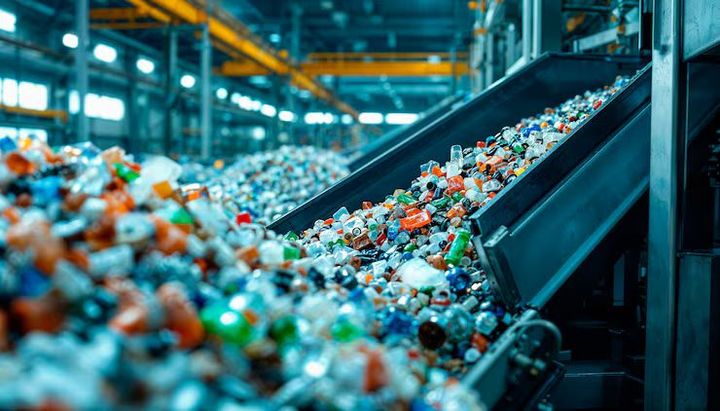
Industrial waste management is the planned process of identifying, separating, storing, treating, recovering, and disposing of waste generated by factories, processing plants, workshops, laboratories, and other industrial facilities.
Industrial waste may include metals, plastics, packaging materials, chemical residues, used oils, ash, wastewater sludge, electronic components, and contaminated materials. Some waste is classified as hazardous because it may present risks to people or the environment.
The basic objective is to keep waste from being mixed unnecessarily and move suitable materials toward reuse, recycling, recovery, treatment, or controlled disposal.
Common Industrial Waste Categories
-
Hazardous waste: Materials that may be toxic, corrosive, reactive, or otherwise hazardous.
-
Non-hazardous waste: General industrial materials such as scrap, packaging, and certain process residues.
-
Wastewater and sludge: By-products from industrial water treatment and manufacturing processes.
-
Electronic waste: Discarded electrical and electronic equipment or components.
-
Organic and process waste: Residues from food, agricultural, chemical, and other production activities.
Why Industrial Waste Management Matters
Effective waste management supports environmental protection, workplace safety, resource efficiency, and regulatory compliance. Poor handling can contribute to soil, air, and water pollution and may increase operational risks.
The topic affects manufacturers, industrial operators, regulators, nearby communities, waste handlers, and downstream recyclers.
Modern approaches increasingly focus on the waste hierarchy. Prevention and reduction generally come before recycling, recovery, treatment, and final disposal.
| Management Approach | Main Purpose |
|---|
| Waste reduction | Minimize waste generated at source |
| Segregation | Keep different waste streams separate |
| Recycling | Recover useful materials |
| Treatment | Reduce hazardous characteristics |
| Energy recovery | Extract usable energy where appropriate |
| Controlled disposal | Manage residual waste safely |
Digital waste management systems, tracking platforms, material inventories, and compliance records can also improve visibility across the waste lifecycle.
Recent Developments in India
India has expanded its focus on circular economy principles and digital waste tracking during 2025 and 2026.
In January 2026, the Ministry of Environment, Forest and Climate Change notified the Solid Waste Management Rules, 2026, replacing the 2016 rules. They came into effect on April 1, 2026, and introduced four-stream source segregation along with online tracking of waste-management stages.
India also continued expanding Extended Producer Responsibility frameworks. During 2025, frameworks covering end-of-life vehicles, construction and demolition waste, and non-ferrous scrap were introduced or strengthened.
In March 2026, a CSIR-led initiative highlighted the potential use of waste foundry sand in road construction, demonstrating the growing emphasis on industrial waste recovery and beneficial reuse.
Government information published in 2026 reported 4,574 registered recyclers across covered waste streams and 417.57 lakh metric tonnes of waste processed as of March 2026.
Laws and Policies Affecting Industrial Waste
In India, industrial waste management is influenced by the Environment (Protection) Act, 1986, the Hazardous and Other Wastes (Management and Transboundary Movement) Rules, 2016, and regulations covering specific waste categories.
Important policy areas include:
-
Hazardous waste classification, handling, storage, treatment, and movement
-
Plastic, electronic, battery, tyre, and used-oil waste management
-
Extended Producer Responsibility requirements
-
Construction and demolition waste management
-
Environmental permissions and pollution-control requirements
-
Digital registration, reporting, and recordkeeping
Requirements can differ according to industry, waste type, facility location, and applicable state-level rules. Organizations should verify current requirements with the relevant pollution-control authorities.
Tools and Resources for Better Waste Management
Several practical tools can support industrial waste planning and monitoring:
-
Waste classification and hazardous waste management checklists
-
Material inventory and waste tracking software
-
Recycling-rate and diversion calculators
-
Waste audit templates
-
Digital manifests and compliance-record systems
-
Environmental monitoring dashboards
-
Regulatory reporting templates
-
Training resources for segregation and safe handling
A structured waste audit can help identify where waste is generated, how it is classified, and where reduction or recovery opportunities may exist.
Frequently Asked Questions
What is industrial waste management?
It is the organized handling of waste generated by industrial activities, including classification, segregation, storage, treatment, recycling, recovery, and controlled disposal.
What is hazardous industrial waste?
Hazardous industrial waste is waste with characteristics that may create risks to human health or the environment, such as toxicity, corrosivity, reactivity, or ignitability.
Why is waste segregation important?
Segregation prevents incompatible materials from being mixed and makes recycling, treatment, recovery, and compliant disposal easier.
How does technology support industrial waste management?
Digital platforms can help organizations record waste quantities, track movement, manage documentation, monitor performance indicators, and organize compliance information.
Is industrial waste always recyclable?
No. Some materials can be recovered or recycled, while others require specialized treatment or controlled disposal because of their composition or contamination.
Conclusion
Industrial waste management is evolving from a disposal-focused activity toward a broader system based on prevention, segregation, recovery, recycling, digital tracking, and circular economy principles. For industrial organizations, understanding waste categories and applicable regulations is essential for responsible operations. Recent developments in India show a stronger emphasis on traceability, producer responsibility, material recovery, and resource-efficient waste management.
Disclaimer: This article provides general educational information and is not a substitute for professional environmental or regulatory guidance. Applicable requirements may vary by waste type, industry, facility, and jurisdiction.