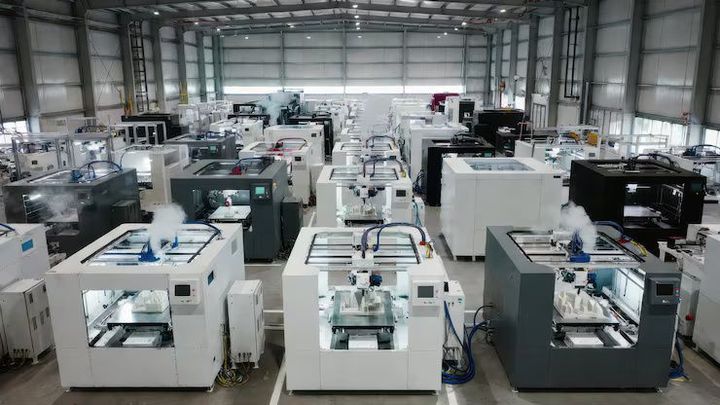
Industrial 3D Printing Machines: Uses, Trends and Policies
Industrial 3D printing machines use additive manufacturing processes to create precise parts layer by layer for aerospace, automotive, energy, research, and advanced manufacturing applications.
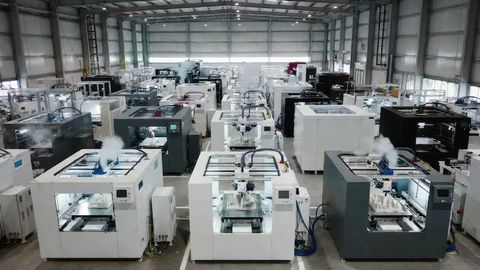
Industrial 3D printing machines are advanced manufacturing systems that create physical components directly from digital 3D designs. Unlike conventional machining, which removes material from a larger piece, additive manufacturing builds an object layer by layer.
These machines can work with materials such as polymers, metals, ceramics, and specialized composites. Common industrial technologies include metal powder bed fusion, directed energy deposition, material extrusion, vat photopolymerization, and binder jetting.
The technology exists because manufacturers often need complex geometries, lightweight structures, customized components, tooling, prototypes, and specialized production parts that can be difficult to create using conventional manufacturing methods.
Industrial additive manufacturing also connects digital design, materials science, process monitoring, inspection, and quality control into one manufacturing workflow.
Why Industrial 3D Printing Matters
Industrial 3D printing is increasingly relevant to advanced manufacturing because it can support complex designs and digitally controlled production.
Key applications
Industries using industrial 3D printing technologies include:
- Aerospace and aviation
- Automotive manufacturing
- Energy and power generation
- Industrial machinery
- Defense manufacturing
- Research laboratories
- Medical-device development
- Electronics and robotics
One important advantage is design flexibility. Engineers can create internal channels, lattice structures, lightweight components, and other geometries that may be difficult to produce through traditional methods.
The technology can also support digital inventories, rapid design iteration, localized production, and production of specialized components. However, performance depends on the selected machine, material, process parameters, inspection method, and application requirements.
Standards are particularly important when printed components are used in demanding environments. NIST identifies ASTM and ISO/ASTM standards covering metal, polymer, design, process, and qualification topics.
Recent Developments in Industrial 3D Printing
During 2025 and 2026, industrial additive manufacturing continued moving toward greater process control, qualification, monitoring, and large-scale applications.
In April 2025, ASTM International announced a collaboration with ASTRO America focused on advancing Additive Friction Stir Deposition. The multi-year initiative includes work involving process, materials, testing, quality infrastructure, and large-scale additive manufacturing.
Another important development is the increasing formalization of process-monitoring data. ISO/ASTM 52953:2025 establishes general principles for registering data acquired through metal additive-manufacturing process monitoring and quality control.
Standards activity is also expanding around qualification, risk management, feedstock characterization, post-processing, and production-site requirements. This reflects the growing need for repeatable manufacturing processes rather than simply successful individual prints.
Laws, Standards and Policies in the United States
Industrial 3D printing in the United States can be affected by workplace safety requirements, environmental rules, intellectual-property protections, export controls, industry-specific regulations, and technical standards.
There is not one single U.S. law governing every industrial 3D printing application. Requirements can vary according to the material, facility, application, and intended use.
For industrial quality management, ISO/ASTM 52920 provides qualification principles for industrial additive-manufacturing processes and production sites. It addresses quality-relevant characteristics and activities across the additive manufacturing workflow.
For regulated or safety-critical applications, organizations may also need documented material specifications, process qualification, inspection, traceability, and testing appropriate to the application.
Tools and Resources for Industrial 3D Printing
Useful resources for understanding and evaluating industrial additive manufacturing include:
- CAD modeling software for digital part design
- Slicing software for preparing machine instructions
- Build-orientation and topology-optimization tools
- Material-property databases
- Process-monitoring systems
- Dimensional inspection equipment
- Non-destructive testing methods
- Digital manufacturing documentation templates
- Additive manufacturing standards databases
- Technical training and research publications
NIST maintains information covering additive manufacturing standards and related research, while ASTM and ISO/ASTM provide standardized terminology, qualification principles, design guidance, testing methods, and process requirements.
Frequently Asked Questions
What materials can industrial 3D printers use?
Depending on the technology, industrial machines can process metals, polymers, ceramics, composites, and specialized feedstocks. Material compatibility depends on the machine and manufacturing process.
What industries use industrial 3D printing?
Aerospace, automotive, energy, industrial equipment, research, medical-device development, robotics, and defense are among the sectors using additive manufacturing.
Is industrial 3D printing only used for prototypes?
No. Industrial additive manufacturing can support prototypes, tooling, fixtures, replacement components, and selected end-use production parts. The suitability of a process depends on technical and regulatory requirements.
Why are additive manufacturing standards important?
Standards help establish consistent terminology, testing, qualification, process control, material characterization, and quality practices. They are particularly important when repeatability and traceability are required.
What should engineers evaluate before selecting a 3D printing process?
Important considerations include material requirements, dimensional accuracy, part geometry, production volume, thermal and mechanical performance, surface requirements, inspection methods, post-processing, and applicable standards.
Conclusion
Industrial 3D printing machines have developed from primarily experimental and prototyping equipment into important tools within modern additive manufacturing. Their applications now cover complex components, tooling, research, specialized production, and digitally controlled manufacturing workflows.
Recent developments show increasing attention to process monitoring, quality assurance, material characterization, large-scale deposition, and formal qualification. For organizations evaluating the technology, understanding the manufacturing process, material behavior, inspection requirements, and applicable standards is essential.
The future of industrial additive manufacturing will depend not only on machine capability but also on reliable processes, qualified materials, digital traceability, workforce knowledge, and appropriate technical standards.
Disclaimer
This article is provided for general educational and informational purposes. Regulatory, safety, export-control, environmental, and industry-specific requirements can vary by application and jurisdiction. Readers should verify applicable requirements with the relevant U.S. authorities and qualified professionals before making technical or compliance decisions.